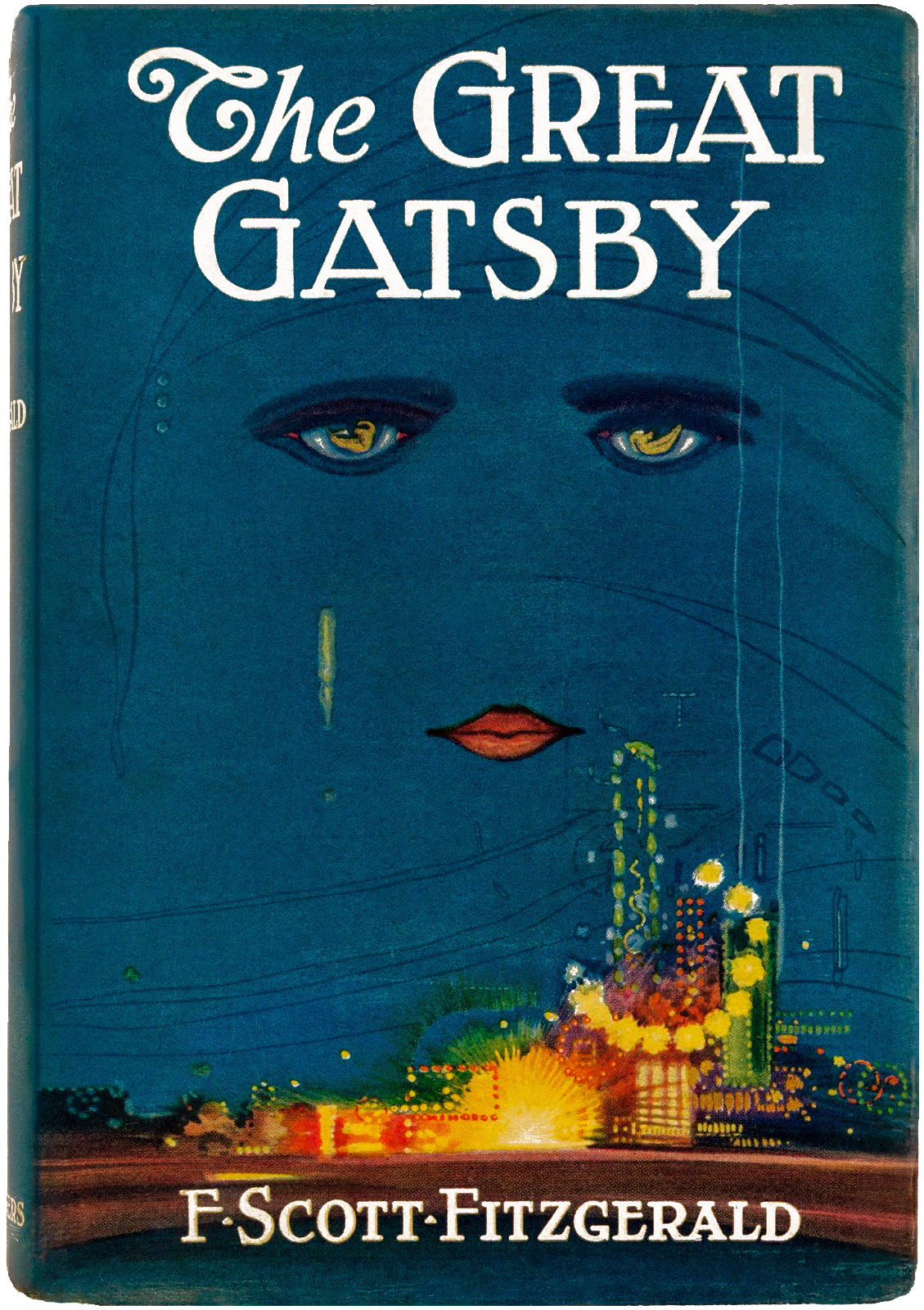
book / 1925
The Great Gatsby
Nick Carraway watches Jay Gatsby chase an invented future with Daisy Buchanan until wealth, longing, and carelessness collapse.
Why read this guide
Use this when the parties are easier to remember than the disappointment underneath them. The guide keeps Gatsby's dream, Daisy's carelessness, and Nick's judgment connected.
WikSynth note
Carelessness is the real danger: The novel's tragedy comes from people with enough money to leave damage behind.
Story in 60 Seconds
The short version
The Great Gatsby is narrated by Nick Carraway, who rents a house on Long Island beside the mansion of Jay Gatsby. Gatsby throws lavish parties, but his real goal is to reunite with Daisy Buchanan, the woman he loved before the war. Daisy is married to Tom, whose wealth and carelessness shape the world around them. Nick helps Gatsby and Daisy meet again, and Gatsby tries to make the past return exactly as he imagines it. The tension breaks in New York, where Tom exposes Gatsby's criminal connections and Daisy cannot fully renounce him. Myrtle is killed by Gatsby's car while Daisy is driving, Gatsby takes the blame, and George Wilson kills him.
Story flow
What happens, at a glance
- 1SetupNick moves beside Gatsby
The narrator enters a world of wealth, parties, and hidden longing.
- 2PressureGatsby reunites with Daisy
His dream becomes real for a moment, but only under pressure.
- 3TurnTom exposes Gatsby
Class power and criminal truth break Gatsby's carefully built image.
- 4EndingGatsby dies waiting
He protects Daisy while the Buchanans retreat into their privilege.
Remember this
The thing to remember is that The Great Gatsby turns desire and class into a personal test, not just a book premise. The ending matters because Jay Gatsby and Daisy Buchanan reveal what the story has been asking the characters to accept.
Spoiler sectionEnding ExplainedShow ending detailsHide ending details
The ending hurts because Gatsby's dream is both sincere and impossible. He believes money and performance can recover a lost version of Daisy, but Daisy belongs to the careless world he wants to enter. Nick sees that Gatsby is greater than the people around him in longing, not in wisdom. The final image of boats against the current turns Gatsby's private dream into a broader human pull toward an unreachable past.
Original context
Why It Matters
The dream is beautiful and false
Gatsby's hope is moving because he believes so completely. It is tragic because the Daisy he wants is partly memory, partly invention.
Carelessness is the real danger
The novel's tragedy comes from people with enough money to leave damage behind. Gatsby pays for a world Tom and Daisy can escape.
Timeline
Major events
- 1Nick moves beside GatsbyThe narrator enters a world of wealth, parties, and hidden longing.
- 2Gatsby reunites with DaisyHis dream becomes real for a moment, but only under pressure.
- 3Tom exposes GatsbyClass power and criminal truth break Gatsby's carefully built image.
- 4Gatsby dies waitingHe protects Daisy while the Buchanans retreat into their privilege.
Story mechanics
Key Turning Points
The hotel confrontation breaks the fantasy
Gatsby needs Daisy to erase the years between them. When she cannot say the perfect line, the dream starts collapsing.
Character Links
Who connects to whom
Character reading
Character Motivations
Nick wants to believe in Gatsby's hope
Nick is not blind to Gatsby's lies, but he is moved by the intensity of the longing behind them and by how rare that hope feels.
Adaptation
Book and film connection
Keep reading
Related Works

Next step
Continue from The Great Gatsby
Finished the guide and want to go further? These links help you look up where to watch, read, borrow, or buy it next.